Acquacotta – Tuscan Vegetable Soup

Glorious, spicy, colourful acquacotta


A traditional, comforting acquacotta soup recipe is from the Maremma region of Tuscany. Our version has Swiss chard and eggs. It is “souper” simple, nourishing and full of flavour. Translated literally it means “cooked water” as during harder times, this was all many Tuscans had to eat – vegetable broth and stale bread. However Acquacotta has since evolved into a rich and comforting dish with bread, eggs and seasonal greens. There are a myriad of recipes that vary hugely from family to family, season to season. The quantity of leaves is abundant and should change according what you have available, so feel free to swap Swiss chard or spinach for kale or cabbage. You should use a sturdy, good quality sourdough if you can, don’t worry if its a little old as it will soften in the soup.

This version is inspired by Antonella Secciani’s family recipe from Grosseto and adapted for a modern kitchen. It was featured in our book on Tuscany published by Kyle Books, photography by Helen Cathcart. This glorious, spicy soup is perfect for breakfast, lunch or a light supper. The egg adds protein but you could always add cooked meat or cheese instead.


Ingredients (Serves 6)

4 tablespoons extra-virgin olive oil

1 red onion, finely sliced into half-moons

2 celery stalks, finely sliced

10 fresh basil leaves

1 litre (4¼ cups) warm chicken or vegetable stock  or hot water

3 heaped tablespoons tomato purée

1 kg Swiss chard or spinach leaves, roughly chopped (2 lb 3 oz / ~8–10 cups packed)

1 teaspoon salt

¼ teaspoon dried chilli flakes

6 small slices crusty bread, toasted

1 garlic clove, peeled

6 eggs

Heat the olive oil in a large saucepan with a lid over a low heat. Add the sliced onion, celery and basil along with a splash of the warm stock or water. Cook gently for around 15 minutes until soft and translucent. Stir the tomato purée into the remaining stock, then pour into the pan. Add the chopped Swiss chard or spinach, salt and chilli flakes. Stir until the greens wilt and the soup begins to bubble.  Reduce the heat, cover loosely and simmer for 30–40 minutes until the flavours are well combined. Taste and adjust seasoning if needed.

Ladle a layer of soup about 1 cm (½ inch) deep into the base of a wide saucepan or casserole dish. Lightly rub one side of each slice of toasted bread with the garlic clove and place them garlic-side up into the pan. Spoon the remaining soup over the bread and crack the eggs on top. Cover with a lid and cook over a medium heat until the eggs are just set.

Remove from the heat and leave to rest in a warm place for 5–10 minutes so the bread absorbs the soup. Serve in warm bowls, ensuring each portion includes an egg.
Ribollita, Tuscan Winter Soup

A delicious Tuscan winter soup packed with healthy vegetables and thickened with sourdough bread and beans

Ribollita

Tuscan Winter Soup

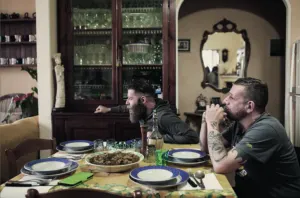
This Tuscan winter soup recipe is made with the dark, robust leaves of cavolo nero, a native Tuscan kale. We had this soup with our friend Franca Buonamici from Lucca and drank it with the neighbour’s homemade red wine. These are her boys below who still come back for lunch from work. I love the fact that the modernity in the tatoos and i-phone contrasts with the medieval soup still being served at home. The photo is by Helen Cathcart from our cookbook Tuscany by Hardie Grant.

Franca S Boys Eating Ribollita

The story is that the recipe dates back to medieval times when the wealthy would use a trencher, a thick slice of bread, to catch the meat juices as they ate. These could be eaten or tossed aside for the animals or peasant workers to collect. The meaty tasting bread would be “reboiled” with vegetables and beans to make a meal, hence the name.

Using three different cabbages is not strictly necessary but you would be surprised how their flavours differ. The white is quite sweet against the bitter kales. This is a dish that can change completely according to what vegetables you have available, what is growing in your orto or what you have in the back of the fridge (you can add the chopped leftover vegetables from a stock into the soup, too – nothing goes to waste in a Tuscan kitchen). The soup can be eaten after cooking but traditionally it is left for a day then layered with saltless spongy Tuscan bread and cooked again. It is often served with a spring onion (scallion): I find it a little overpowering, but the choice is yours!

Serves 6–8

For the soffritto

6 tablespoons extra-virgin olive oil

1 medium carrot, roughly chopped

1 large red or white onion, finely chopped

1 large celery stalk, roughly chopped

2 garlic cloves, peeled and lightly squashed

1–2 teaspoons salt

freshly ground black pepper, to taste

a large handful of parsley, finely chopped, including stalks

1 sprig of rosemary (optional)

For the soup

250 g (9 oz) potatoes, cut into 2 cm (¾ in) dice

250 g (9 oz) white cabbage, shredded (like coleslaw)

400 g (14 oz) raw cavolo nero or 200 g

 (7 oz) cooked and squeezed leaves, roughly chopped

75 g (2½ oz) curly kale, tough stalks removed and leaves roughly chopped (optional)

1 litre (34 fl oz/4¼ cups) warm chicken stock, plus 250 ml (8½ fl oz/1 cup) bean cooking water or more stock

250 g (9 oz) cooked cannellini beans

6 large slices Tuscan-style crusty bread or very good sourdough

1 garlic clove, peeled

spring onions (scallions), to serve

Cook all the soffritto ingredients for the base together for 10–15 minutes over a low heat until soft. Add the potatoes and shredded white cabbage and cook over a medium heat until the cabbage starts to wilt. If using raw cavolo nero, strip the leaves from the stalks and tear the leaves into bite-size pieces. Add the cavolo nero and kale to the dish and stir through.

Pour in the stock and bring to boil, turn the heat down to a simmer and cook for 30 minutes, or until the vegetables are cooked through. Divide the cannellini beans in half and add one half to the soup. Purée the other half with a stick blender, then add this to the soup too. Cook for a further 10 minutes or so to warm the beans through. Taste and season as necessary. Serve straight away or let the soup cool before transferring to the fridge if keeping overnight.

Preheat the oven to 180°C (350°F/Gas 4). Toast the bread until lightly crisp, then rub each slice with the garlic clove. Pour a layer of the soup into an ovenproof serving bowl, top with a few slices of bread followed by another layer of soup. Repeat until the bread and soup is used up. Put into the oven for 20–30 minutes or until the soup is piping hot and the bread has soaked up the juices. Serve warm with one spring onion per bowl and a swirl of your best extra-virgin olive oil.